
India has reiterated its support for freedom of navigation and unimpeded commerce in the South China Sea, backing a 2016 international arbitral tribunal ruling that rejected China's extensive territorial claims. This stance aligns with a recent joint statement by the US, UK, and other nations, emphasising peaceful resolution of maritime disputes under UNCLOS.

India has once again raised alarms over the escalation in the security situation in the Red Sea area and strongly condemned Houthi strikes targeting Saudi Arabian territory, "including on civilians and economic assets."

As many as 35 vessels, including cargo carriers and oil tankers, successfully navigated through the strategic maritime chokepoint of the Strait of Hormuz over the last 24 hours, according to Iran's state media reports citing a formal declaration by the Islamic Revolutionary Guard Corps (IRGC) Navy.

Iranian Foreign Minister Seyyed Abbas Araghchi stated that the Strait of Hormuz remains open to all commercial vessels, requiring ships to coordinate with Iranian naval forces due to regional tensions and a US blockade.

Iran's Persian Gulf Strait Authority (PGSA) has declared the Strait of Hormuz closed due to 'recent illegal movements' by the US military, demanding transit permits, while the US Central Command (CENTCOM) insists the strait is 'open to all vessels' and vows to ensure 'freedom of navigation'.

India has expressed strong concerns over attacks on commercial ships in the Strait of Hormuz, citing its importance to India's energy and economic security. Ambassador Yojna Patel highlighted the need to respect international law and ensure the safety of seafarers, while also addressing broader Middle East issues including the situation in Gaza and Lebanon.

China has denied any links to the Iranian cargo ship seized by the US in the Gulf, which allegedly contained chemical materials for manufacturing missiles. The denial follows allegations by former US envoy to the UN Nikki Haley, who claimed the ship was headed from China to Iran.

The UN Security Council, with India's support, has adopted a resolution condemning Iran's attacks on Gulf Cooperation Council countries and Jordan, demanding an immediate cessation of hostilities and denouncing threats to the Strait of Hormuz.

Major General Amir Hatami, commander-in-chief of the Iranian Army, condemned the attack on the vessel, one of the country's newest warships, which occurred while it was returning from a military exercise.

US President Donald Trump expressed confidence in America's position amid US-Iran peace talks in Islamabad, stating that Washington stands to 'win' regardless of a deal.

Following the death of Iranian sailors in the Indian Ocean, Iran's navy has threatened 'deadly retaliation,' accusing the US of attacking its warship off the coast of Sri Lanka, escalating tensions in the region.

The LPG squeeze on India's restaurant sector is the quotidian face of a deeper crisis.
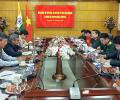
The 15th India-Vietnam Defence Dialogue signalled a move from routine talks to deeper cooperation, with new deals on submarine rescue and defence industry to support stability in the Indo-Pacific, notes Dr Rajaram Panda.
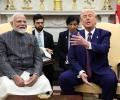
'Trump's aggressive stance towards China and preference for military posturing could shift the Quad's balance towards overt militarisation.'
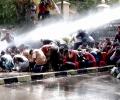
The Bharat Mata controversy in Kerala shows how political and symbolic fights between the state and the Centre have taken attention away from education, throwing the state's oldest university into confusion and disorder, observes Shyam G Menon.

United States President-elect Joe Biden administration is likely to be as tough as President Donald Trump's on the several contentious issues between Washington and Beijing such as the South China Sea, South China Morning Post reported citing experts.

Shigeru Ishiba is expected to prioritise strengthening Japan's military capabilities and fostering deeper international partnerships, particularly with India, with whom Japan shares significant strategic interests, explains Dr Rajaram Panda.
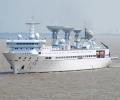
India has expressed concern about the movement of the Xiang Yang Hong 03 vessel in Indian Ocean waters and also prevailed on Sri Lanka to refuse permission for the ship to dock at Colombo port.

The US remained "watchful" over developments along India's frontier with China as it cannot take its eyes off the regional security issues, a senior American official said on Wednesday against the backdrop of the over 29-month border standoff in eastern Ladakh that has significantly frayed ties between the two neighbours.

Although the pact would focus mainly on the Pacific and the South China Sea region, any action designed to deter China with or without New Delhi's active participation is a welcome move, notes Commodore Venugopal Menon (retd).

Japan also reported that five of those missiles landed in its exclusive economic zone, understandably causing grave concern.

'After a strategic pause though, Beijing will revive its policy of slowly creeping towards acquiring sovereignty over the South China Sea.'

In anticipation of a verdict to be delivered by the International Tribunal of the Permanent Court of Arbitration in The Hague on Tuesday, China has orchestrated a worldwide campaign to defuse its findings.

India and Bangladesh have opened a new chapter in their ties as they settled the 41-year-old boundary dispute and promised to do more in other areas amid Prime Minister Narendra Modi's announcement of a fresh line of credit of $2 billion (Rs 12,821 crore) to the neighbouring country.

The new government needs to clearly insist on diplomatic reciprocal arrangements with China. While reciprocity is a function of power in bilateral relations, the Modi-led government's responses should be based on India'S inherent strengths, says China expert Srikanth Kondapalli.

China continues to hold out on fingering Pakistan as the 'mothership of terror,' declaring Masood Azhar a terrorist at the UN, and India's membership of the NSG, says China expert Srikanth Kondapalli.

'Trump's stated strong stance against Islamist extremism and terrorism could play into the Indo-US relationship.' 'It could mould US attitude and exert pressure on Pakistan.' 'In the event of US military presence in Afghanistan increasing, however, Pakistan could gain an opportunity to again emphasise its importance.'

Modi's visit to some developed countries such as the US, Japan, China and Australia were sprinkled with humongous investment figures. But do we have the wherewithal to absorb such big investments?

'It is a pattern of behaviour of the Chinese that whenever a Chinese leader visits India or an Indian leader visits China, some incidents take place.' 'When Modi visits China, we should look out for some similar demonstration by the Chinese.'
